Volume 407, Issue 10543
23 May 2026
WORLD REPORT Experts question the effectiveness of the Trump administration’s strategies to cut pharmaceutical costs in the USA. Washington Correspondent Susan Jaffe reports.
…
…


Republicans in the US Congress gave President Donald Trump his first major legislative victory, which provides the largest amount of tax and spending cuts in US history. The One Big Beautiful Bill Act (OBBB) slashes nearly $1 trillion over a decade from Medicaid—the most sweeping cuts since the health insurance programme for people with low incomes was created 60 years ago. The law will hit another historic first by taking health insurance away from more US residents than ever before—nearly 17 million, according to the Congressional Budget Office.
Prescription drugs were excluded from US President Donald Trump’s tariffs that have rocked global markets and fuelled trade wars. But two recent actions signal the administration’s intention to eliminate that protection. Last month, Trump ordered the Department of Commerce to investigate whether the USA’s dependence on imported pharmaceuticals is a potential national security threat. If so, imposing tariffs would be a likely defence against imports. [Continued here.]…
Martin Makary fielded questions for nearly 2 h from a Senate committee last month before winning approval to take the helm as commissioner at the Food and Drug Administration (FDA). His early actions have provided some additional answers about how he will likely run an agency that impacts Americans’ daily lives but is depleted by the forced departure of at least 3500 scientists and other staff. [Continued here.]…
…
“There’s nothing unusual about an executive order”, said Professor Emeritus Laurence Tribe, an expert in constitutional law at Harvard Law School. “What is unusual is for the President of the United States to say, ‘I can do anything I want, as long as I package it in an executive order. I can exercise not only the power to enforce the laws, which is basically what the executive branch does, but also the power to ignore law.’ ” Lawsuits have been filed to block executive orders affecting federal funding, workforce protections, closing the US Agency for International Development, and information on government websites including the Center for Disease Control and Prevention.[Full article here, includes links to updates on legal actions and executive orders.]
…

The uninsured rate in the United States is at an historic low. But a shortage of health-care providers means even people who can afford to go to the doctor might not be able to find one.[Full story here, from The Lancet’s special issue, “A Presidential Briefing Book.”]…


As election day approaches on Nov 5, the US presidential race remains a tense and close competition despite unprecedented events—the Democratic candidate was replaced in August, and two attempts have been made to assassinate the Republican candidate. And despite the sharp contrast between former President Donald Trump, a Republican, and Democrat Vice President Kamala Harris, neither has so far managed to emerge as the frontrunner as The Lancet went to press. [Here‘s what the candidates say they would do on abortion, Affordable Care Act and other key health issues.]…
WORLD REPORT Health-care issues were conspicuously absent from the 4-day party convention culminating in Donald Trump’s nomination as the Republican 2024 presidential candidate. Susan Jaffe reports.
Former US President Donald Trump spent 93 minutes accepting the Republican Party’s nomination for president last week, exceeding his own 2016 record for the longest acceptance speech at a political convention. But there was no time to mention major health-care issues such as abortion, the COVID-19 pandemic, medical research funding, the Affordable Care Act (ACA), or the opioid epidemic, to name a few. Yet domestic and global healthcare spending consume the largest part of the US budget. [Continued here.]…

“My North Star has been about building healthier communities”, Dr. Cohen said. “Sometimes that’s about access to doctors and hospitals and sometimes that’s about larger issues, and how we build healthier communities where we live, work, play, and pray.” That goal has motivated Cohen throughout her career. “I loved being a physician, but I’m always thinking about the broader context in which my patients live.” [Full article here.]
…
WORLD REPORT Health-care workers are urging Americans to support the Democratic candidates for president and vice president, emphasising the health issues at stake. Susan Jaffe reports. [Continued here.]…

WORLD REPORT Justices did not address claims that mifepristone endangered patients and that its approval by the FDA was flawed. Opponents vow to continue the legal fight. Susan Jaffe reports [continued here].
…
WORLD REPORT The exposure of residents to lead in drinking water caused a national outcry, prompting requirements to update infrastructure and tighten water quality standards. Susan Jaffe reports.
“Flint is making an impact beyond Flint”, said Mona Hanna-Attisha, a Flint paediatrician who collected data on children’s lead blood levels in 2015. “We’re sharing those big lessons—the need to respect science, the need to invest in prevention, the need to pay attention to things like infrastructure and inequities, but also the really amazing lesson of doing something about it.”. [Continued here]…
WORLD REPORT Plans to protect reproductive rights, further reduce drug prices, and improve women’s health research have been welcomed by some experts. Susan Jaffe reports from Washington, DC.
The State of the Union address is typically a report to Congress on the nation’s progress and goals entwined with occasional lofty rhetoric, but this one was different…. “This speech signals that health care will be a big part of President Biden’s campaign this year”, said Larry Levitt, Executive Vice President for Health Policy at KFF, formerly the Kaiser Family Foundation. [Continued here]…


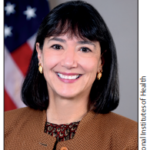
“I imagine a health-care system where clinical decisions are informed in real time by current research data,” the new National Institutes of Health director tells The Lancet. “And one where patients have the opportunity to both contribute their data for research and get back research results so that they can experience the best that science has to offer.” [Susan Jaffe reports here.]…
WORLD REPORT Americans pay some of the highest prices in the world for prescription drugs, but the decision by the US Food and Drug Administration to allow Florida to import cheaper medications from Canada won’t cut prices any time soon. Although the ruling represents a shift in the decades-long fight for drug importation, opposition from the US pharmaceutical industry, Canadian health officials, and others is expected to block implementation at every stage. [Susan Jaffe reports, here]…
WORLD REPORT Thwarted by Congress, President Joe Biden has created the first White House Office of Gun Violence Prevention. Susan Jaffe reports from Washington, DC.
With Congress unable to ban even the most dangerous firearms made for war zones, US President Joe Biden announced a new strategy to deal with gun violence afflicting the nation: creating the first White House Office of Gun Violence Prevention. Frustrated by the congressional impasse, Biden essentially conceded that the new Office was not the best solution for reducing the unrelenting toll of gun violence in the USA.
“I’ll continue to urge Congress to take common sense actions that the majority of Americans support, like enacting universal background checks and banning assault weapons and high-capacity magazines”, Biden said in his announcement. “But in the absence of that sorely needed action, the Office of Gun Violence Prevention along with the rest of my Administration will continue to do everything it can to combat the epidemic of gun violence that is tearing our families, our communities, and our country apart.” [Continued here]…
Volume 402, Issue 10402
WORLD REPORT Republicans question funding for the President’s Emergency Plan for AIDS Relief, one of the USA’s most effective global health programmes. Susan Jaffe reports from Washington, DC.
As Congress considers next month whether to renew funding for the President’s Emergency Plan for AIDS Relief (PEPFAR), global health advocates fear its two decades of bipartisan support might fracture. Created by President George W Bush in 2003, the programme is often cited as proof that adversaries across the political spectrum can agree on healthcare policy. …But this time is looking different. [Continued here.]…