Tag: Affordable Care Act
Harris or Trump? Health in the US election
Volume 404, Issue 10464
2 November 2024
WORLD REPORT Aside from abortion, health issues have largely been neglected in the run-up to the Nov 5 election. What have the candidates proposed to improve health? Susan Jaffe reports.


As election day approaches on Nov 5, the US presidential race remains a tense and close competition despite unprecedented events—the Democratic candidate was replaced in August, and two attempts have been made to assassinate the Republican candidate. And despite the sharp contrast between former President Donald Trump, a Republican, and Democrat Vice President Kamala Harris, neither has so far managed to emerge as the frontrunner as The Lancet went to press. [Here‘s what the candidates say they would do on abortion, Affordable Care Act and other key health issues.]…
Modest health goals for new US Congress
Volume 400, Issue 10369
17 December 2022
WORLD REPORT With Congress almost evenly split between Republicans and Democrats, consensus on any major health legislation is unlikely. Susan Jaffe reports.
When a new US Congress convenes in January, 2023, the slim Republican majority in the House of Representatives and the Democrats’ even smaller margin in the Senate will not enable either party to make major changes in the health-care system. With President Joe Biden promising to use his veto power to defend his health-care agenda, no significant fixes are expected. But there appears to be bipartisan support for some less ambitious legislation on issues that will overcome congressional gridlock.[Continued here.]…
Health organisations welcome US climate crisis law
Volume 400, Issue 10354
3 September 2022

WORLD REPORT The recently passed Inflation Reduction Act will provide billions of dollars of incentives to reduce greenhouse gas emissions. Susan Jaffe reports.
There are no emission limits or pollution penalties in the landmark Inflation Reduction Act that Congress approved in August. Instead of forcing cuts, the climate change and healthcare law provides US$370 billion worth of incentives to ratchet down the planet-warming greenhouse gases from fossil fuels that have caused record-breaking heat waves, wild fires, droughts, and floods. …The law provides $60 billion for communities that have been disproportionately affected by toxic hazards and the consequences of climate change. [Continued here.]
…Medicare for All scrutinised in Democratic primaries
![]()
Volume 395 Number 10225 29 February 2020
WORLD REPORT On March 3, 14 states will pick their nominees for the US presidential election. The feasability of a single payer insurance plan is a key issue. Susan Jaffe reports from Washington, DC.
Anxiety about rising health-care costs— the top issue for Democratic voters, according to recent polls—propelled Bernie Sanders to the head of the pack in last week’s Democratic primary contest in Nevada. Of the six leading candidates vying for the party’s presidential nomination, Sanders, a Vermont senator and self-described democratic socialist, has proposed the most radical solution for lowering medical bills and reaching universal coverage. His signature policy initiative, the Medicare for All single-payer programme, would eliminate private health insurance, including employment-based plans that cover about half of the US population. [Article compares Medicare for All and the public option proposal favoured by former Vice President Joe Biden; continued here]
State exemptions to the Affordable Care Act expanded
Volume 392, Number 10164
15 December 2018
WORLD REPORT In its latest blow to the ACA, the Trump administration provides guidance on how states can circumvent the health law. Susan Jaffe, The Lancet‘s Washington correspondent, reports.
Trump’s second Supreme Court nominee, Brett Kavanaugh
Volume 392, Number 10144
28 July 2018
WORLD REPORT If confirmed, Kavanaugh could tilt the court toward the president’s views on US public health policy. Susan Jaffe, The Lancet‘s Washington correspondent, reports.

…
Temporary CHIP funding falls short
Susan Jaffe | Washington Correspondent for The Lancet | 29th December 2017
Despite wide bipartisan support for the Children’s Health Insurance Program (CHIP), Congress agreed last week to continue coverage for 8.9 million children only through the end of M
arch. But several of the program’s state directors say the $2.85 billion rescue plan won’t even last that long, and federal health officials are not offering much reassurance. [Continued here.] Temporary CHIP 122917…
Trump administration begins to confront the opioid crisis
Volume 390, Number 10108
11 November 2017
WORLD REPORT As the Presidential Commission releases its recommendations, Trump moves closer to defining his policies against the opioid epidemic Susan Jaffe, The Lancet’s Washington correspondent, reports.
“Having failed to recognise how this epidemic was going to grow in proportion and take vigorous enough action, we need to be willing to be far more vigorous so we don’t continue with that mistake,” said Food and Drug Administration Commissioner Scott Gottlieb. [full story here]
…
The ACA after the expiry of the budget reconciliation
Volume 390, Number 10104
14 October 2017
WORLD REPORT After the latest repeal bill was withdrawn and the budget reconciliation has expired, what does the future hold for the ACA? Susan Jaffe, The Lancet’s Washington correspondent, reports.
Republicans claim the ACA isn’t working and point to the rising cost of monthly premiums and the various counties across the USA where only one or two insurers offer coverage through the ACA’s online insurance marketplaces.… “[But] they’re not letting it fail, they’re making it fail,” said Stan Dorn, a senior fellow at Families USA, a consumer advocacy group that worked to help pass the ACA. [Continued here]…
Republican Party lays out platform for Election 2016
Susan Jaffe | Washington Correspondent for The Lancet | 15 July 2016![]()
Cleveland, OH – The Republican Party’s platform committee approved a blueprint this week that reflects the core principles of its most conservative wing, describing how a Republican presidential candidate would govern if elected.

Photo:SUSAN JAFFE
Several delegates said they don’t expect the presumptive Republican presidential nominee, Donald Trump, to agree with every point and that’s OK.
“With Mr. Trump, on a lot of these issues, he’s with us,” said Melody Potter, a member of the Republican National Committee from Charleston, West Virginia. “We know for a fact that Hillary Clinton is not with us.”
…Reporters attending the platform committee meetings this week were not allowed to see copies of the roughly 50-page document delegates discussed. But some delegates were willing to mention some health care provisions. [Continued] …
US election: what are the candidates’ health-care pledges?
Volume 387, Number 10026
2 April 2016
WORLD REPORT Democrats vying for their party’s presidential nomination have more detailed health-care plans than their Republican counterparts. Susan Jaffe, The Lancet’s Washington correspondent, reports.
Billionaire real estate developer Donald Trump’s unorthodox campaign to become the Republican presidential nominee has dominated the 2016 political race, nearly overshadowing some unconventional contenders on the Democratic side. The result is a political season that has defied the odds makers.
Former US Secretary of State and Senator from New York, Democrat Hillary Clinton may be well on her way to becoming the first woman in US history to win her party’s nomination for president. Vermont Senator Bernie Sanders, a self-proclaimed socialist, is trailing Clinton in the number of delegates needed to win the nomination. Yet his popular call for “a political revolution” continues to slowly raise his delegate count. [MORE]
…
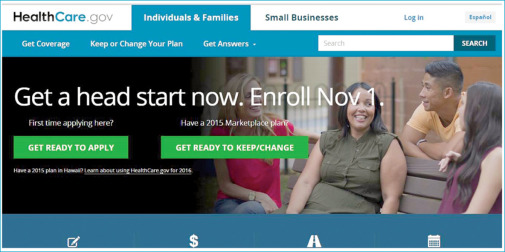
USA gears up for next round of enrolment under the ACA
WORLD REPORT As enrolment begins for the Affordable Care Act’s health insurance, officials cut estimates of how many Americans will get coverage. Susan Jaffe, The Lancet’s Washington correspondent, reports.
The past 2 years of President Barack Obama’s landmark health insurance programme haven’
t been easy—surviving two Supreme Court challenges, nearly done-in by embarrassing technical glitches, and more than 50 congressional votes attempting to dismantle it. But its troubles are not yet over: enrolling new beneficiaries “is going to be tougher than last year”, warned Health and Human Services (HHS) Secretary Sylvia Mathews Burwell.
Burwell and other Obama Administration officials are damping down enrolment expectations just days before the 3-month sign-up period for 2016 coverage begins on Nov 1. [Continued here ]
…Congressional showdown threatens NIH funding boost
Volume 386, Issue 9996, 29 August 2015
WORLD REPORT Bills providing extra funding for the National Institutes of Health while cutting other programmes could a face presidential veto. Susan Jaffe, The Lancet’s Washington correspondent, reports.
After years of mostly stagnant funding for the US National Institutes of Health (NIH), two powerful congressional committees that control government spending have approved separate budget bills containing record increases for the agency.
But last month, President Barack Obama’s Office of Management and Budget director Shaun Donovan wrote to the chairman of the Senate Committee on Appropriations warning that he expects the president to veto its bill. Among other reasons, Donovan said it “drastically” cuts money for public health programmes including Medicare for the elderly and Medicaid, serving low-income Americans. And it would deny funds for operating the health insurance exchanges essential to the president’s signature health reform law, the Affordable Care Act. [Continued in full text or PDF ]
…50 Years of Medicare
Volume 386, Issue 9992, 1 August 2015
WORLD REPORT In July, 1965, Medicare, America’s landmark national health insurance programme, became law. Today, it covers 55 million people. Susan Jaffe, The Lancet’s Washington correspondent, reports.
Richard Troeh joined a very busy solo family medicine practice in 1966 but even with two doctors, their offi ce in Independence, Missouri, seemed just as hectic. The year before, President Lyndon Baines Johnson came to town to sign the Medicare legislation into law at the Truman library. Former President Harry Truman—an advocate of national health insurance since the 1940s—and his wife attended the event and were among the fi rst Americans to receive Medicare cards.
50 years later, the Social Security Amendments of 1965 provide health care for 55 million people older than 65 years or disabled receiving Medicare and nearly 73 million low-income adults, children, pregnant women, and people with disabilities receiving Medicaid, an optional programme also created under the same law.
And in the process, the government programmes have transformed health care in the USA. Medicare is the nation’s largest single purchaser of health care, consuming 14% of last year’s federal budget, or US$505 billion. And it also has a fiercely loyal following that opposes efforts to cut benefits. Speaking earlier this month at the White House Conference on Aging, President Barack Obama drew laughs when he said, “And now we’ve got [protest] signs saying, “Get your government hands off of my Medicare”. [Continued in full text or PDF ] [listen to podcast here]
…New Regulations Would Require Modernizing Nursing Home Care
By Susan Jaffe | July 13, 2015 | Kaiser Health News in collaboration with
After nearly 30 years, the Obama administration wants to modernize the rules nursing homes must follow to qualify for Medicare and Medicaid payments.
The hundreds of pages of proposed changes cover everything from meal times to use of
antipsychotic drugs to staffing. Some are required by the Affordable Care Act and other recent federal laws, as well as the president’s executive order directing agencies to simplify regulations and minimize the costs of compliance.
“Today’s measures set high standards for quality and safety in nursing homes and long-term care facilities,” said Health and Human Services Secretary Sylvia M. Burwell. “When a family makes the decision for a loved one to be placed
in a nursing home or long-term care facility, they need to know that their loved one’s health and safety are priorities.”
Officials announced the update as the White House Conference on Aging convenes Monday. The once-a-decade conclave sets the agenda for meeting the diverse needs of older Americans, including long-term care options. This month also marks the 50th anniversary of the Medicare and Medicaid programs, which cover almost 125 million older, disabled or low-income Americans. Medicare and Medicaid beneficiaries make up the majority of residents in the country’s more than 15,000 long-term care facilities. [MORE from Kaiser Health News and NPR]…
US Supreme Court upholds ACA subsidies
Volume 385, Issue 9988, 4 July 2015
WORLD REPORT Officials expect to launch the US President’s new health project later this year. But Congress has yet to decide whether to fully fund it. The Lancet’s Washington correspondent, Susan Jaffe, reports.
Although critics still deride it as Obamacare, President Barack Obama’s Supreme Court victory last week
enshrined the Affordable Care Act (ACA) as one of his greatest domestic accomplishments. The court might have also effectively disarmed the opposition, shifting the debate to next year’s campaign for the presidency as the next chance for critics to try to dismantle the law.
But for 6·4 million Americans who could have lost the health law’s insurance subsidies—the key issue before the court—the historic ruling has a different meaning. “Thank God, I can still get my medical care”, said Jacqueline Clay, a New Jersey woman receiving treatment for breast cancer who turned 61 years of age the day the court upheld the subsidies. “I am not going to die.” [Continued in full text or PDF ]…
When Turning 65, Consumers With Marketplace Plans Need To Be Vigilant In Choosing Health Coverage
By Susan Jaffe | June 25, 2015 | Kaiser Health News
Befor
e the Affordable Care Act, older adults who couldn’t afford to buy their own health insurance would count the days until their 65th birthday, when Medicare would kick in. Now, 10,000 Americans hit that milestone every day, but for some who have coverage through the ACA’s insurance marketplaces, Medicare may not be the obvious next step.
“Consumers eligible for Medicare can keep or renew their marketplace plan,” said Medicare spokesman Alper Ozinal, as long as they don’t also join Medicare. [Continued in Kaiser Health News]…
Planning for US Precision Medicine Initiative underway
Volume 385, Issue 9986, 20 June 2015
WORLD REPORT Officials expect to launch the US President’s new health project later this year. But Congress has yet to decide whether to fully fund it. The Lancet’s Washington correspondent, Susan Jaffe, reports.
While continuing to defend his besieged health-care reform law against lawsuits and repeal threats, US President Barack Obama is championing a new health initiative. This one also has a bold goal: to radically change the medical treatment patients receive in the USA. “I want the country that eliminated polio and mapped the human genome to lead a new era of medicine—one that delivers the right treatment at the right time”, the President said when he unveiled his Precision Medicine Initiative (PMI) in his annual State of the Union address to the nation in January. …Central to the PMI will be the creation of a research cohort of 1 million US volunteers who agree to provide researchers with biological, environmental, lifestyle, and other information as well as tissue samples….The effort to vastly expand the scope and practice of individually designed treatments based on genetic information could revolutionise medicine, supporters say. But the success of the PMI depends on whether Congress agrees to fund it. [Continued in full text or PDF ] …
Obamacare, Private Medicare Plans Must Keep Updated Doctor Directories In 2016
By Susan Jaffe | March 9, 2015 | Kaiser Health News and also published in 
Starting next year, the federal government will require health insurers to give millions of Americans enrolled in Medicare Advantage plans or in policies sold in the federally run health exchange up-to-date details about which doctors are in their plans
and taking new patients.
Medicare Advantage plans and most exchange plans restrict coverage to a network of doctors, hospitals and other health care providers that can change during the year. Networks can also vary among plans offered by the same insurer. So it’s not always easy to figure out who’s in and who’s out, and many consumers have complained that their health coverage doesn’t amount to much if they can’t find doctors who accept their insurance. [More from KHN] [More in USA Today]
…
Aging In Rural America
For older Americans, accessing high-quality care can be a challenge. For those in rural communities, it’s even harder.
By SUSAN JAFFE Health Affairs January 2015 Volume 34, Number 1

Care in rural America: Dr. Robert Wergin goes over medications with Sharon Stutzman at the Milford Family Medical Center in rural Nebraska.
In the southeastern Nebraska town of
Milford, population 2,100, Dr. Robert Wergin understands it’s not easy for some of his older patients to get to his office. Some may live on isolated farmsteads several miles out of town, and if they don’t drive, their son or daughter—if nearby—may have to take time off from work to bring them to their appointments because there’s no public transportation. Massive snowstorms are nothing special but still cause a wave of cancellations.
In addition to these challenges, rural America’s elderly tend to be poorer, have higher levels of chronic disease, and have a dwindling supply of health care providers, compared to their peers in urban communities, explains Brad Gibbens, deputy director of the University of North Dakota’s Center for Rural Health, in Grand Forks. And their support system is shrinking, as more young adults seeking job opportunities head out to urban areas. “The elderly [rural] population tends to stay put because that’s where they’ve lived all their lives, and there isn’t really an economic beacon that’s pulling them to another area,” he says. [Continued in Health Affairs, and PDF here]…
Second round of enrolment begins under Affordable Care Act
Volume 384, Issue 9956, 15 November 2014
WORLD REPORT Ahead of the next phase of enrolment for insurance plans, Republicans vowed to target the health law following their election win. Susan Jaffe, Washington correspondent, reports.
Federal health officials promise that last year’s embarrassing enrolment problems will not be repeated when the sign-up season begins on Nov 15 for 2015 health insurance policies offered under the Affordable Care Act (ACA). But even as more insurance companies and millions more Americans enter the second year of the health insurance programme, the opportunity for critics to chip away at it will never be better when Republicans regain control of Congress in January.
…Under the law, all adults are required to have health insurance and, with some exceptions, those without it are penalised. People who don’t get health coverage through their jobs can buy policies through the online state or federal insurance exchanges from Nov 15 to Feb 15. To minimise the delays many experienced last year, federal officials who run the exchanges in 37 states have shortened the application and no longer require shoppers to spend time setting up accounts before they can review the plans.
Although this month marks the second enrolment period, US Department of Health and Human Services (HHS) Secretary Sylvia Matthews Burwell has been eager to stress that it won’t be a rerun of last year. “It’s not year two”, she told reporters recently, because this is the first time the exchanges will be renewing current policies while also handling first-time applications. [MORE full text or PDF ] …
Diabetes, obesity, and the Affordable Care Act
Diabetes & Endocrinology, 9 June 2014
Under the new health law, Americans with chronic disorders cannot be denied health insurance. Susan Jaffe reports from Washington, DC.
Before President Barack Obama’s landmark health law took effect, obtaining affordable health insurance could be difficult for Americans with diabetes or obesity, if not impossible. Insurers that didn’t turn diabetic patients away could charge higher rates because these individuals had a pre-existing health problem, or they could exclude coverage for certain treatments for diabetes or other chronic disorders. Now such practices are prohibited under the Patient Protection and Affordable Care Act (ACA)…but some insurers’ “bad habits” still linger. [MORE]…
Challenges loom for US health law as new insurance begins
Volume 383, Issue 9928, 3 May 2014
WORLD REPORT Millions of Americans met the mid-April extended deadline to enrol in coverage under the Affordable Care Act; now the real test of the law begins. Susan Jaffe reports from Washington, DC.
Just a few days after April’s extended enrolment deadline, President Barack Obama announced that some 8 million Americans had signed up for health insurance under his health-care law, exceeding the predictions dampened by a rocky rollout 6 months ago that prompted jokes on late-night talk shows, fuelled the opposition, and ultimately led to the resignation of his Health and Human Services secretary, Kathleen Sebelius, the nation’s top health official.
“The repeal debate is and should be over”, Obama proclaimed, referring to the 54 times Republicans in the US House of Representatives have voted to repeal or modify the law. “The Affordable Care Act [ACA] is working.”
But even the programme’s supporters say the next few months will be crucial to its success. [MORE] [PDF]…
Link
Volume 382, Issue 9892, 17 August 2013
WORLD REPORT Despite delaying some provisions of the Affordable Care Act, the US Government says it is on target to begin enrolling millions of Americans in the law’s new health coverage. Susan Jaffe reports.
Less than 7 weeks before millions of Americans begin enrolling in the new health insurance plans offered under President Barack Obama’s landmark Affordable Care Act (ACA), critics claim that his Administration isn’t ready and will preside over a monumental failure and a waste of taxpayer dollars.
…While federal officials continue to fend off Republican attacks on the law (unabated despite Obama’s re-election and the Supreme Court’s ruling upholding most of the law) they are also trying to complete work on the system needed to help Americans choose and enroll in an insurance plan and to determine their subsidy eligibility. …“Let me be clear”, US Health and Human Services (HHS) Secretary Kathleen Sebelius told reporters on Aug 5. “We are on target and ready to flip the switch on Oct 1.” [MORE] [PDF]