Volume 407, Issue 10553
01 August 2026
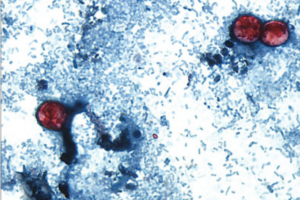
WORLD REPORT The epidemiological challenges of the parasite have been compounded by recent cutbacks at US health agencies. Susan Jaffe reports from Washington DC.
…

…

WORLD REPORT Justices did not address claims that mifepristone endangered patients and that its approval by the FDA was flawed. Opponents vow to continue the legal fight. Susan Jaffe reports [continued here].
…
WORLD REPORT Americans pay some of the highest prices in the world for prescription drugs, but the decision by the US Food and Drug Administration to allow Florida to import cheaper medications from Canada won’t cut prices any time soon. Although the ruling represents a shift in the decades-long fight for drug importation, opposition from the US pharmaceutical industry, Canadian health officials, and others is expected to block implementation at every stage. [Susan Jaffe reports, here]…
Volume 401, Issue 10385
WORLD REPORT A lawsuit against the FDA embroils pharmaceutical companies in debates over access to
abortion. Susan Jaffe reports from Washington, DC.
Less than 1 year after the US Supreme Court ended its 1973 constitutional guarantee to an abortion and told state lawmakers that they could decide whether a person ends their pregnancy, abortion is now back before the court. But this fresh legal challenge has dragged the nation’s entire drug approval system along with it, rousing a powerful lobbying group and economic force that has mostly managed to avoid the fray—the pharmaceutical industry. [Continued here.]…
Volume 399, Issue 10330WORLD REPORT Robert Califf will have to face several controversial health issues in his second tenure as commissioner. Susan Jaffe reports from Washington, DC.
The FDA’s emergency use authorisation (EUA) issued last week gives physicians the option to prescribe the drugs, which President Donald Trump has recommended. However, both drugs are unproven and untested for COVID-19, and have rare but potentially deadly side-effects. The decision bypassed the usual drug approval process including doubleblind, placebo-controlled clinical trials, stoking a worldwide debate about whether the drugs are appropriate for treating the disease.
“I think it was resorted to more out of a sense of desperation”, said Joseph Masci, an infectious disease specialist and director of global health at Elmhurst Hospital in Queens, a borough of New York City, which is at the centre of the epidemic in the USA. “It is just an indication of how sudden and massive this outbreak has been.” [Continued here.]
…
Volume 393, Number 10176
16 March 2019
WORLD REPORT The announcement came as a surprise, prompting many to ask: Can the US FDA commissioner’s policies continue without him? Susan Jaffe reports.
Volume 390, Number 10108
WORLD REPORT As the Presidential Commission releases its recommendations, Trump moves closer to defining his policies against the opioid epidemic Susan Jaffe, The Lancet’s Washington correspondent, reports.
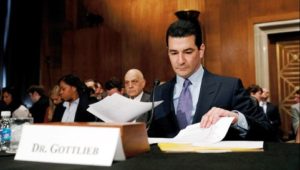
“Having failed to recognise how this epidemic was going to grow in proportion and take vigorous enough action, we need to be willing to be far more vigorous so we don’t continue with that mistake,” said Food and Drug Administration Commissioner Scott Gottlieb. [full story here]
…
27 May 2017
WORLD REPORT Scott Gottlieb becomes commissioner of the FDA, as the agency’s role is threatened by an administration adverse to regulation. Susan Jaffe, The Lancet’s Washington correspondent, reports.
Only 6 months ago, Scott Gottlieb was still a resident fellow at the American Enterprise Institute, a co
nservative thinktank, when he presented testimony to a US Senate committee investigating prescription drug prices. Before he began, he volunteered that he was “a reformed government bureaucrat, having worked at FDA [US Food and Drug Administration] for a number of years”. He blamed astonishing price hikes—500% in the case of Mylan’s EpiPen—on “regulatory failures stemming from FDA policy, and I think that policy can be fixed”.

Gottlieb was sworn in as the 23rd commissioner of the FDA after being approved earlier this month by the US Senate, over the strong objections of most Democrats. Now Gottlieb will have a chance to fix a daunting array of policies. [Continued here] …
The US Congress recently approved the largest single increase in funding for the National Institutes of Health (NIH) in 12 years—a US$2 billion raise that was twice as much as President Barack Obama requested. But almost as soon as NIH supporters stopped cheering, they began to worry about next year’s budget, and the challenge of a new public health threat, Zika virus.
NIH Director Francis Collins told The Lancet that the funding boost “was enormously gratifying”. But if it is “a one-hit wonder”, he said “it won’t be sufficient to take full advantage of the remarkable scientific opportunities and talent that is out there”. [Continued here] [podcast here]
…
Like many Americans, members of Congress are frustrated and angry about the huge spikes in prescription drug prices. While a congressional hearing held last week to investigate the practice united Democrats and Republicans in outrage, it did not reveal potential solutions.
The unwilling star witness was Martin Shkreli, the former head of Turing Pharmaceuticals who was responsible for the company’s decision to raise the price of Daraprim, used to treat toxoplasmosis, a parasitic infection that affects HIV patients, from $13.50 to $750 a pill. [Continued here] …

The US Congress has become famous for political gridlock but s
hortly before going home for the holidays, members approved a 2,009-page budget for fiscal year 2016 with generous increases for some key health and science agencies, most notably the ailing National Institutes of Health. [Continued here.]…
Volume 385, Issue 9983, 30 May 2015
WORLD REPORT A bill to speed up the translation of biomedical discoveries is getting wide support, but some argue that it is not adequately funded. Susan Jaffe, The Lancet’s Washington correspondent, reports.
An ambitious bipartisan plan to accelerate medical innovation in the USA is moving ahead in a Congress famous for political gridlock.
The proposed 21st Century Cures Act was approved unanimously on May 21 by the US House of Representatives’ Committee on Energy and Commerce. The massive bill would promote discovery of new medicines and get them to patients more quickly. But the bill’s bipartisan support nearly collapsed when Democrats insisted on additional funds for the two federal agencies intricately involved in carrying out the bill’s far-reaching provisions.
Behind-the-scenes discussions finally yielded an infusion of US$10 billion over 5 years for the National Institutes of Health (NIH). Shortly before the committee vote, $550 million over 5 years was added for the Food and Drug Administration (FDA), which is responsible for ensuring new treatments are safe and effective. …But funding for both agencies did not come easy, is still uncertain, and might fall far short of what is needed. [Continued full text or PDF]…

Volume 385, Issue 9970, 28 February 2015
WORLD REPORT US Food and Drug Administration commissioner Margaret Hamburg is stepping down after nearly 6 years in office. The Lancet‘s Washington correspondent, Susan Jaffe, reports on her achievements.
Margaret Hamburg
At the end of March, Margaret Hamburg is leaving what has got to be one of the toughest unelected US Government jobs outside of the Pentagon—commissioner of the US Food and Drug Administration (FDA).
A champion of science-based regulation and streamlined approvals for breakthrough drugs, the Harvard-trained physician is one of the two longest-serving FDA commissioners in five decades.
The FDA is responsible for the safety of 20% of the products Americans buy, including more than US$1 trillion dollars worth of goods that might seem to have little in common, such as artificial hips, dietary supplements, gene therapy, surgical lasers, prescription drugs for human beings and animals, nanotechnology products, cosmetics, blood and biologics products, tobacco, and—last but not least—most of the food we eat (excluding meat and poultry, which are the domain of the agriculture department). The agency has 16 000 employees. [article continued in full text or PDF]
…
Volume 381, Issue 9882, Pages 1975 – 1976, 8 June 2013
WORLD REPORT Health and science agencies in the USA have been operating on reduced budgets, enforced by sequestration, for just over 3 months Susan Jaffe reports from Washington, DC.
The automatic budget cuts known as sequestration that the US Congress approved in 2011 were intended to be so onerous that they would never happen. Lawmakers would surely find a more reasonable way to save at least US$1·2 trillion over the next decade before the cuts would begin in 2013. Instead, Republicans and Democrats could not agree on an alternative, and the first wave of cuts, totalling $85 billion through to September, 2013, are phasing in for most non-defence US Government operations. Everything from White House tours to the most promising cancer research have been limited by a lack of funding.
..Many services provided by the US Department of Health and Human Services (HHS) are affected, including programmes at the Food and Drug Administration (FDA) and the Centers for Disease Control and Prevention (CDC), and medical research funded by the National Institutes of Health (NIH). Even the Affordable Care Act (ACA)—President Barack Obama’s landmark health reform law—will feel the impact, with supporters worried that enrolment for next year’s new health insurance coverage will have a difficult start in October. [FULL STORY AS PDF]
A new law passed in July to strengthen the work of the US Food and Drug Administration may hit some serious barriers to implementation. Susan Jaffe reports from Washington, DC.
WORLD REPORT Volume 380, Issue 9852, Pages 1458 – 1459, 27 October 2012
The massive drug and medical device safety bill that won extraordinary near-unanimous support in the US Congress—despite a budget crisis and a contentious political campaign—is facing major challenges less than 3 months after President Barack Obama signed it into law in July. And in the process, prospects may be fading for additional reforms. [MORE]