By Susan Jaffe | Kaiser Health News | December 14, 2016 | This KHN story also ran on 
When Cindy Hunter received her Medicare card in the mail last spring, she said she “didn’t know a lot about Medicare.” She and her husband, retired teachers who live in a Philadelphia suburb, decided she didn’t need it because she shared his retiree health insurance, which covered her treatment for ovarian cancer.

Cindy Hunter, who is battling ovarian cancer, says she mistakenly thought she didn’t need to enroll in Medicare because her husband’s retiree insurance would cover her. (Steph Brecht/Courtesy of Cindy Hunter)
“We were so thankful we had good insurance,” she said. So she sent back the card, telling officials she would keep Medicare Part A, which is free for most older or disabled Americans and covers hospitalization, some nursing home stays and home health care. But she turned down Part B, which covers doctor visits and other outpatient care and comes with a monthly premium charge. A new Medicare card arrived that says she only has Part A.
Her story isn’t unique.
When Stan Withers left a job at a medical device company to become vice president of a small start-up near Sacramento, Calif., he took his health insurance with him. Under a federal law known as COBRA, he paid the full cost to continue his coverage from his previous employer. A few years earlier, when he turned 65, he signed up for

This KHN article also ran in The Philadelphia Inquirer.
Medicare’s Part A. With the addition of a COBRA plan, he thought he didn’t need Medicare Part B.
Hunter and Withers now know they were wrong and are stuck with medical bills their insurance won’t cover. …Advocates for seniors and some members of Congress want to fix the problem, backed by a broad, unlikely group of unions, health insurers, patient organizations, health care providers and even eight former Medicare administrators. [Continued on Kaiser Health News or NPR or The Philadelphia Inquirer]…


 ‘t guarantee – billions of dollars to accelerating the discovery of new drugs and medical devices and getting them to patents more quickly, as well as supporting opioid addiction treatment and reforms in mental health care.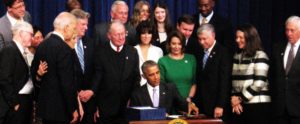
 reschool teacher who lives in Kingsley Manor, a retirement community in Los Angeles. “I didn’t know what I was going to do about dental care.”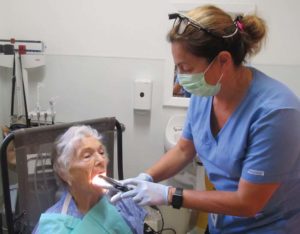
 nis, acting director of the Medicare Enrollment and Appeals Group at the Centers for Medicare & Medicaid Services.
  l their marketplace policies.



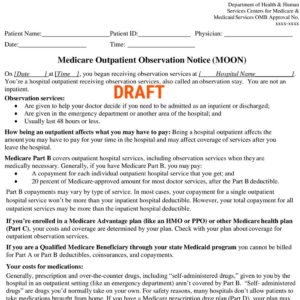 was a response to complaints from Medicare patients who were surprised to learn that although they had spent a few days in the hospital, they were there for observation and were not admitted. Observation patients are considered too sick to go home yet not sick enough to be admitted. They may pay higher charges than admitted patients and do not qualify for Medicare’s nursing home coverage.
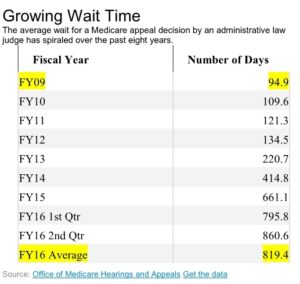 challenging denied claims continues to spiral, increasing the backlog of cases and delaying many decisions well beyond the timeframes set by law, according to a government study released Thursday.
 Looking for ways to save money and improve care, Medicare officials are returning to an old-fashioned idea: house calls.