Author: Jaffe.KHN@gmail.com

Biden Pleads for Open Data for Cancer Moonshot

Susan Jaffe | Washington Correspondent for The Lancet | 10th May 2016

Three months after Vice President Joe Biden convened the first meeting of the Cancer Moonshot Task Force—aimed at accelerating the-lancet-usa-blog-logo1cancer prevention, treatment and cures—he pleaded for help from people who know how to marshal massive amounts of health data to create successful businesses, or apps that can guide consumers to the best hospitals. [continued here]…

US responds to increase in Zika cases

 lancet cover 2Volume 387, Number  10030
30 April  2016 
WORLD REPORT    Health officials pursue Zika research and prepare to combat a formidable foe—the mosquito— despite uncertain funding.   Susan Jaffe, The Lancet’s Washington correspondent, reports.

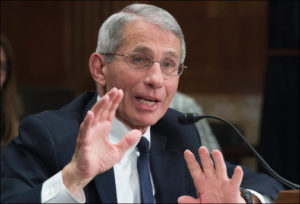
Anthony Fauci

As the number of confirmed cases of people who have contracted the Zika virus increases across the globe, the growing knowledge  about this once rare infection is not reassuring. “The more we learn, the more we get concerned”, said Anthony Fauci, director of the National Institute of Allergy and Infectious Diseases…. 

Representative Tom Cole, the Oklahoma Republican who is chairman of the House appropriations health subcommittee, said its questions about [President Barack Obama’s $1.9 billion Zika emergency funding] request are not unreasonable….“Let us do our job to make sure we do this as prudently as possible and we will get there”, he said. “Nobody thinks this is not a serious challenge”….

While clinical research and the funding debate continues, protection from the Zika virus will depend largely on avoiding the mosquitoes that carry it….

After years of cuts in federal and local funding for mosquito control, Zika is “a pretty major wake up call to rebuild those capacities”, said Lyle Petersen, director of CDC’s division of vector-borne infectious diseases. The virus is the latest “major pathogen that has come into the Americas” in recent years—after chikungunya, dengue fever, and West Nile virus—“and it won’t be the last.” [continued here]  [listen to podcast here] …

Paris Climate Change agreement to be signed in New York

Susan Jaffe | Washington Correspondent for The Lancet | 19th April  2016

Secretary of State John Kerry will join world leaders at the United Nations headquarters in New York on April 22 to sign the landmark Paris Climate Change agreement, aimed at controlling greenhouse gasThe Lancet USA blog logoes and preventing what many scientists believe would be the harmful effects of global warming.

Representatives of some 155 countries  are expected at the signing ceremony, including President François Hollande of France, Canadian Prime Minister Justin Trudeau and other heads of state. …UN Secretary-General Ban Ki-moon has urged all countries to ratify the agreement as soon as possible.  “It is in their national interest to implement the agreement and reap the benefits of sustainable global climate action,” he said in an email to The Lancet.

…When 55 countries responsible for at least 55 percent of global emissions do so, the agreement takes effect.  That could happen this year said UN spokeswoman Devi Palanivelu, noting that several countries are coming to New York with ratification documents they will submit after signing the agreement.  But things are not moving as swiftly in the U.S.  [Continued here]  …

US election: what are the candidates’ health-care pledges?

 lancet cover 2Volume 387, Number  10026 
2  April  2016 
WORLD REPORT    Democrats vying for their party’s presidential nomination have more detailed health-care plans than their Republican counterparts.  Susan Jaffe, The Lancet’s Washington correspondent, reports.

Billionaire real estate developer Donald Trump’s unorthodox campaign to become the Republican presidential nominee has dominated the 2016 political race, nearly overshadowing some unconventional contenders on the Democratic side.  The result is a political season that has defied the odds makers.

Former US Secretary of State and Senator from New York, Democrat Hillary Clinton may be well on her way to becoming the first woman in US history to win her party’s nomination for president. Vermont Senator Bernie Sanders, a self-proclaimed socialist, is trailing Clinton in the number of delegates needed to win the nomination. Yet his popular call for “a political revolution” continues to slowly raise his delegate count. [MORE]

 …

When Medicare Advantage Drops Doctors, Some Members Can Switch Plans

By Susan Jaffe  | Kaiser Health News | March 29, 2016 | This KHN story also ran on  nprlogo_112x37

Eliza Catchings has been seeing doctors at the Christie Clinic in central Illinois since 1957. But just after receiving this year’s WellCare Medicare Advantage member card, the insurer told her the clinic was leaving WellCare’s provider network and she would have to choose new doctors.

“I was terrified,” said Catchings, 79, who gets care for diabetes and heart problems. But she was helped by a little-noticed change in federal policy.

Medicare Advantage plans sold by private insurers are an alternative to traditional Medicare, but they cover services only from doctors, hospitals and other providers that are in the insurer’s network. Although providers are allowed to drop out of the plans any time, members can usually change only during the annual sign-up period in the fall. There are exceptions, but until recently losing a provider was not among them.

After insurers dropped hundreds of providers in 2013, the Centers for Medicare and Medicaid Services issued rules giving people a “special enrollment period” to change plans or join regular Medicare if there was a “significant” change in their provider network. The policy took effect in 2015 and applies only to Medicare Advantage members, not to the plans CMS oversees in the health law’s marketplaces. …Yet officials didn’t explain what they considered significant or what would trigger the option.

In the past eight months, Medicare officials have quietly granted the special enrollment periods to more than 15,000 Medicare Advantage members in seven states, the District of Columbia and Puerto Rico based on provider cuts. These decisions offer important details about how members can get permission to follow their doctors who leave their plans. … Medicare doesn’t publicize the option, and few beneficiaries may know about it. Representatives who answered calls earlier in March to Medicare’s toll-free number said nothing could be done.  [Continued on Kaiser Health News or NPR] 

 …

Zika response threatened by funding shortage

Susan Jaffe | Washington Correspondent for The Lancet | 14 March 2016The Lancet USA blog logo

Congress hasn’t budged in the five weeks since President Barack Obama asked Congress for more than $1.8 billion in emergency funding to deal with the Zika virus. But Zika isn’t waiting.

In the weeks since the president’s request, the number of cases of the mosquito-borne virus among people who traveled to countries where transmission has been confirmed has almost quadrupled to 193, as of March 9. It is in nearly twice as many states — 32 and the District of Columbia — with Florida, New York and Texas topping the list. In Puerto Rico, the U. S. Virgin Islands, and American Samoa, the number of cases is 174, or 19 times higher, reports the US Centers for Disease Control and Prevention.  [continued here]  …

NIH hopes funding increases will continue

 lancet cover 2Volume 387, Number  10019
13 February 2016
WORLD REPORT   The US National Institutes of Health welcomed a record budget boost that might be the start of more sustained support. The Lancet’s Washington correspondent, Susan Jaffe, reports.

The US Congress recently approved the largest single increase in funding for the National Institutes of Health (NIH) in 12 years—a US$2 billion raise that was twice as much as President Barack Obama requested. But almost as soon as NIH supporters stopped cheering, they began to worry about next year’s budget, and the challenge of a new public health threat, Zika virus.

NIH Director Francis Collins told The Lancet that the funding boost “was enormously gratifying”. But if it is “a one-hit wonder”, he said “it won’t be sufficient to take full advantage of the remarkable scientific opportunities and talent that is out there”.   [Continued here] [podcast here]

 …

Congress Wrangles Over Funding for Zika Research

Susan Jaffe | Washington Correspondent for The Lancet | 12th February 2016

President Barack Obama asked Congress this week for more than $1.8 billion in emergency funding The Lancet USA blog logoto respond to Zika virus and administration officials wasted no time in explaining why at four congressional hearings less than two days later.

While such Capitol Hill visits are part of the budget process, the looming virus adds a new urgency to the proceedings–though not necessarily enough to deter controversy. [Continued here]…

Shkreli pleads the Fifth on drug price hikes

Susan Jaffe | Washington Correspondent for The Lancet | 10th February 2016

Like many Americans, members of Congress are frustrated and angry about the huge spikes in prescription drug prices. While a congressional hearing held last week to investigate the practice united Democrats and Republicans in outrage, it did not reveal potential solutions.

     The unwilling star witness was Martin Shkreli, the former head of Turing Pharmaceuticals who was responsible for the company’s decision to raise the price of Daraprim, used to treat toxoplasmosis, a parasitic infection that affects HIV patients, from $13.50 to $750 a pill. [Continued here]  …

Buying Supplemental Insurance Can Be Hard For Younger Medicare Beneficiaries

By Susan Jaffe | February 3,  2016 | Kaiser Health News in collaboration with Money magazine

Danny Thompson’s kidneys have failed and he needs a transplant but in some ways, he’s lucky: Both of his sons want to give him one of theirs, and his Medicare coverage will take care of most his expenses.

Danny Thompson    (Heidi de Marco/KHN) 

Yet the 53-year-old Californian is facing another daunting obstacle: He doesn’t

have the money for his share of the medical bills and follow-up drugs, and he can’t buy supplemental insurance to help cover his costs.

“It’s frustrating to be in the shape I’m in,” said Thompson, who depends on dialysis instead of his kidneys to cleanse his blood. “My plan is to get a transplant so I can go back to work.”

Almost one in four Medicare beneficiaries has such a policy, known as Medigap, which is sold by private insurance companies. It can help pay for costs Medicare doesn’t cover, including the 20 percent coinsurance required for medical expenses, including certain drugs, plus deductibles and co-payments. Those expenses have no out-of-pocket limit for beneficiaries.

Money cover

This KHN story also ran on Money.

Federal law requires companies to sell Medigap plans to any Medicare beneficiary aged 65 or older within six months of signing up for Part B, which covers doctor visits and other outpatient services. If they sign up during this guaranteed open enrollment, they cannot be charged higher premiums due to their medical conditions.

But Congress left it to states to determine whether Medigap plans are sold to the more than 9 million people younger than 65 years old who qualify for Medicare because of a disability. [Continued in Kaiser Health News or Money magazine.]…

Hospitals Step Up To Help Seniors Avoid Falls

By Susan Jaffe | Kaiser Health News | January 12, 2016     This KHN story also ran in washingtonpost SMALL logo

Falls are the leading cause of injuries for adults 65 and older, and 2.5 million of them end up in hospital emergency departments for treatment every year, according to the Centers for Disease Control and Prevention. The consequences can range from bruises, fractured hips and head injuries to irreversible calamities that can lead to death.

Despite these scary statistics, a dangerous fall does not have to be an inevitable part of aging.   Risk-reduction programs are offered around the country, including several at hospitals in the Washington area.  [Full article from Kaiser Health News  and The Washington Post]    [Watch video of  balance training class] …

Some Congress members say a 1980 law may curb rising drug prices

Susan Jaffe | Washington Correspondent for The Lancet | 13th January 2016

No single federal agency reviews US drug prices, but 51 members of  the U. S. House of Representatives have discovered a 35-year-old law that allows the governmeThe Lancet USA blog logont to control huge hikes in drug costs.  And they want the Department of Health and Human Services and National Institutes of Health (HHS) to use it.  Earlier this week the group led by Texas Democrat Lloyd Doggett wrote to HHS Secretary Sylvia Matthews Burwell and NIH director Dr. Francis Collins to explain why. [Continued here]…

Budget boon for biomedical research

Susan Jaffe | Washington Correspondent for The Lancet | 31st December 2015

budget 123115The US Congress has become famous for political gridlock  but sThe Lancet USA blog logohortly before going home for the holidays, members approved a 2,009-page budget for fiscal year 2016 with generous increases for some key health and science agencies, most notably the ailing National Institutes of Health. [Continued here.]…

Paris climate change agreement faces hurdles in the USA

Susan Jaffe | Washington Correspondent for The Lancet | 31st December 2015
Only a few hours after thousands of representatives from 195 countries approved the landmark Paris cliThe Lancet USA blog logomate change agreement, President Barack Obama stepped before the TV cameras at the White House to congratulate them. It Paris 2offers the best chance we have to save the one planet we have,” Obama said. “We’ve shown that the world has both the will and the ability to take on this challenge.”

But the international consensus to reduce global warming failed to move the Republican candidates competing for Obama’s job.  {Continued here.]
…

Home-Care Workers


Susan Jaffe | Washington Correspondent for The Lancet | 28 August 2015

Home-care workers are excluded from the federal law requiring most employees to receive a minimum wage—currently $7·25 an hour—and 150% of that pay when they work overtime. After 40 years, the US Department of Labor (DOL) issued rules eliminating that exemption. The new rule was supposed to take effect last January but it was blocked by a lawsuit filed by associations representing companies that hire these workers. [Continued here.]  [with video of Illinois Congresswoman Jan Schakowsky shadowing home-care worker Gilda Pipersburgh]…

Robert Califf: leading cardiologist is new FDA Deputy

lancet cover 2

Volume 385, Issue 9970

28 February 2015

As the new Deputy Commissioner for Medical Products and Tobacco at the US Food and Drug Administration (FDA), world-renowned cardiologist Robert Califf arrives at a time when the FDA’s overall responsibilities have grown exponentially.  The Lancet‘s Washington correspondent, Susan Jaffe, reports.  [article continued as full text or PDF] [Podcast with Dr. Califf here.]

…

IG Report Findings Could Strengthen Nursing Home Inspections

Federal efforts to strengthen inspections of the nation’s nursing homes are gaining momentum after a government probe uncovered instances of substandard care.

The March 3 report by the HHS Inspector General found that an estimated one-third of residents suffered harm because of substandard care and that the chances of nursing home inspectors discovering these “adverse events” are “slim to none,” said Ruth Ann Dorrill, a deputy regional director for the inspector general and the manager of the investigation.

Nearly 60 percent of these incidents were preventable — including injuries due to falls or medication errors — and more than half of residents were hospitalized as a result, costing Medicare an estimated $2.8 billion in 2011, according to investigators. In 6 percent of the cases, poor care contributed to residents’ deaths….


After reviewing a September draft of the IG report, Medicare officials became interested in using the IG’s investigative techniques, methods not normally used in measuring nursing home quality, Dorrill said. [Continued on KHN and The Washington Post]…

As HHS Moves To End Overload Of Medicare Claims Appeals, Beneficiaries Will Get Top Priority

By Susan Jaffe  Jan. 21, 2014  KAISER HEALTH NEWS  in collaboration with 

Medicare beneficiaries who have been waiting months and even years for a hearing on their appeals for coverage may soon get a break as their cases take top priority in an effort to remedy a massive backlog.

Nancy Griswold, the chief judge of the Office of Medicare Hearings and Appeals (OMHA), announced in a memo sent last month to more than 900 appellants and health care associations that her office has a backlog of nearly 357,000 claims. In response, she said the agency has suspended acting on new requests for hearings filed by hospitals, doctors, nursing homes and other health care providers, which make up nearly 90 percent of the cases. But beneficiaries’ appeals will continue to be processed.

“We have elderly or disabled Medicare clients waiting as long as two years for a hearing and nine months for a decision,” said Judith Stein, executive director of the Center for Medicare Advocacy. [More from KHN] [More from Washington Post]…

Fighting ‘Observation’ Status

By Susan Jaffe   |   January 10, 2014, 2:41 pm  

Every year, thousands of Medicare patients who spend time in the hospital for observation but are not officially admitted find they are not eligible for nursing home coverage after discharge. 

…Medicare officials have urged hospital patients to find out if they’ve been admitted. But suppose the answer is no. Then what do you do?

Medicare doesn’t require hospitals to tell patients if they are merely being observed, which is supposed to last no more than 48 hours to help the doctor decide if someone is sick enough to be admitted. (Starting on Jan. 19, however, New York State will require hospitals to provide oral and written notification to patients within 24 hours of putting them on observation status. Penalties range as much as $5,000 per violation.)  [Continued in The New York Times.]…

UnitedHealthcare Dropping Hundreds Of Doctors From Medicare Advantage Plans

By Susan Jaffe  | November 29, 2013 |  Kaiser Health News produced in collaboration with 

Dorathy Senay’s doctor had some bad news after her last checkup, but it wasn’t about her serious blood disorder called amyloidosis. Her Medicare Advantage managed care plan from UnitedHealthcare/AARP is terminating the doctor’s contract Feb. 1. She is also losing her oncologist at the prestigious Yale Medical Group — the entire 1,200 physician practice was axed. Senay, 71, of Canterbury, Conn., is among thousands of UnitedHealthcare Medicare members in 10 states whose doctors will be cut from their plan network.

The company is the largest Medicare Advantage insurer in the country, with nearly 3 million members. More than 14 million older or disabled Americans are enrolled in Medicare Advantage plans, an alternative to traditional Medicare that offers medical and usually drug coverage but members have to use the plan’s network of providers.

“I have a rare incurable disease and these doctors have saved my life,” said Senay. “I am in good hands and I will not change doctors.”

…Medicare officials review the private plans every year to make sure they comply with network adequacy and other requirements, but the agency did not approve the reconfigured networks resulting from the new provider cancelations. Spokesman Raymond Thorn said the agency “is currently reviewing UHC and other plans’ provider networks and closely monitoring all areas that have experienced disruptions to ensure that beneficiaries have full, transparent and timely information and access to needed care.” [More from KHN] [More in USA Today]…

FAQ: Medicare Beneficiaries May See Increased Access To Physical Therapy Or Some Other Services

By Susan Jaffe | June 25, 2013 | Kaiser Health News  in collaboration with

For years, seniors in Medicare have been told that if they don’t improve when getting physical therapy or other skilled care, that care won’t be paid for. No progress, no Medicare coverage — unless the problem got worse, in which case the treatment could resume.
This frustrating Catch-22 spurred a class-action lawsuit against Health and Human Services Secretary Kathleen Sebelius. In January, a federal judge approved a settlement in which the government agreed that this “improvement standard” is not necessary to receive coverage.

“This will help a lot of older or disabled people who clearly need the skilled care and aren’t getting it because they will not get better,” said Margaret Murphy, associate director of the Center for Medicare Advocacy, which helped bring the lawsuit. “The settlement recognizes that Medicare will pay for care to maintain their condition and prevent backsliding.”

Yet providers may not know about the settlement yet and may still be telling patients, incorrectly, that Medicare won’t cover treatment if there’s no improvement. MORE

 …

Seniors Need To Be Tenacious In Appeals To Medicare

Dan Driscoll used to be a smoker. During a regular doctor’s visit, his primary-care physician suggested that Driscoll be tested to see if he was at risk for an abdominal aortic aneurysm, a life-threatening condition that can be linked to smoking. The doctor said Medicare would cover the procedure. So Driscoll, 68, who lives in Silver Spring, had the test done and was surprised when he got a bill from Medicare for $214.

“I didn’t accept that,” he said, because based on everything he had read from Medicare, he was sure this was a covered service. So Driscoll did something that seniors rarely do: He filed an appeal.  Of the 1.1 billion claims submitted to Medicare in 2010 for hospitalizations, nursing home care, doctor’s visits, tests and physical therapy, 117 million were denied. Of those, only 2 percent were appealed.

“People lose, and then they lose heart, or they are too sick, too tired or too old, and they give up,” said Margaret Murphy, associate director of the Center for Medicare Advocacy, which has offices in Washington and Connecticut. “Or their kids are handling the appeal and they are too overwhelmed caring for Mom or Dad.”  [Continued at Kaiser Health News and The Washington Post.]

How To File A Medicare Appeal  Here are some basic steps for challenging Medicare coverage denials…. [Continued at Kaiser Health News.]

…

Medicare Combats Fraud With Billing Statements That Beneficiaries Can Understand


Susan Jaffe | March 7, 2012 | KAISER HEALTH NEWS produced in collaboration with 

In the latest effort to enlist seniors in the fight against Medicare fraud, federal officials have overhauled Medicare billing statements to make it easier to find bogus charges without a magnifying glass. ….And for those who might need an incentive to scour their bills, the new statements promise a reward of up to $1,000 for a tip that leads to uncovering fraud.[Continued here.]…

During open enrollment season, seniors can get help picking a Medicare drug plan

Three weeks after suffering a heart attack, Bernie Hollander came to a recent meeting at Leisure World in Silver Spring with his wife, Rose, to learn about the Medicare drug plans being offered next year. “I’m a heart patient, I’m a diabetic – I have a lot of problems,” said Hollander, 81, who lives in the retirement community. But getting the expensive medications he needs isn’t one of them. e was at the meeting to get updated advice from Leta Blank, head of the Montgomery County Senior Health Insurance Assistance Program (SHIP).

Although drug coverage is optional, millions of Medicare beneficiaries enroll in a plan, and choosing the right one can be tricky. Seniors who want drug coverage must sort through dozens of policies covering different drugs from different pharmacies at different prices. Federal SHIP counselors can help untangle the details. [Continued on The Washington Post and Kaiser Health News, view video]…

Doctors skittish about health technology despite promise of big federal bucks

By Susan Jaffe  | Center for Public Integrity  |  July 7, 2011

The goal is to bring the last outposts of the nation’s health care system into the computer age, linking medical providers so that they can coordinate and improve patient care and — in the process—reduce unnecessary health care spending. But convincing everyone to use electronic health records has not been easy. …Neither  reward nor punishment has 

persuaded some small practice doctors — a troubling omen for the Obama administration, which believes that conversion of paper records to electronic form is a crucial step toward health care reform. [Continued]

…