By Susan Jaffe | Kaiser Health News | July 27, 2016 | This KHN story also ran in 
Only days after Judy Hanttula came home from the hospital after surgery last November, her doctor’s office called with bad news: Records showed that instead of traditional Medicare, she had a private Medicare Advantage plan, and her doctor and hospital were not in its network.
Neither the plan nor Medicare now would cover her medical costs. She owed $16,622.
“I was panicking,” said Hanttula, who lived in Carlsbad, N.M., at the time. After more than five hours making phone calls, she learned that becaus e she’d had individual coverage through Blue Cross Blue Shield when she became eligible for Medicare, the company automatically signed her up for its own Medicare Advantage plan after notifying her in a letter. Hanttula said she ignored all mail from insurers because she had chosen traditional Medicare.
“I felt like I had insured myself properly with Medicare,” she said. “So I quit paying attention to the mail.”
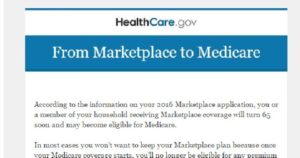
With Medicare’s specific approval, a health insurance company can enroll a member of its marketplace or other commercial plan into its Medicare Advantage coverage when that individual becomes eligible for Medicare. Called “seamless conversion,” the process requires the insurer to send a letter explaining the new coverage, which takes effect unless the member opts out within 60 days. [Continued in The Washington Post and Kaiser Health News]
 Volume 388, Number 10057
 l their marketplace policies.
 s. But after a nearly four-hour congressional hearing last week investigating spikes in Mylan’s EpiPen prices, Maryland Democrat Elijah Cummings told Mylan CEO Heather Bresch, “You might as well have taken the Fifth, too, with the kind of information that we’ve gotten here today.”